
H2Zero trial – testing technology for scaled efficiency
This case study was first published in our 2024/25 impact report
The challenge
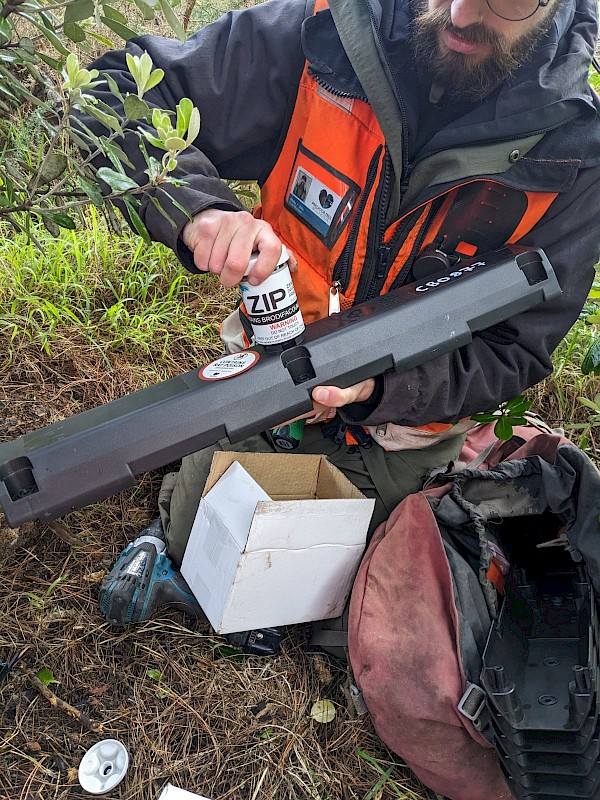 A Predator Free Wellington field worker installing an H20 in Mt Victoria.We need a range of effective tools in our kit. Standard bait stations work well for most situations, but need fortnightly visits to refresh bait and check activity. As we scale this work across Wellington, we need extra tools that can eliminate rats more efficiently. This might be by devices which need checking less often or perform better in difficult areas.
Our approach
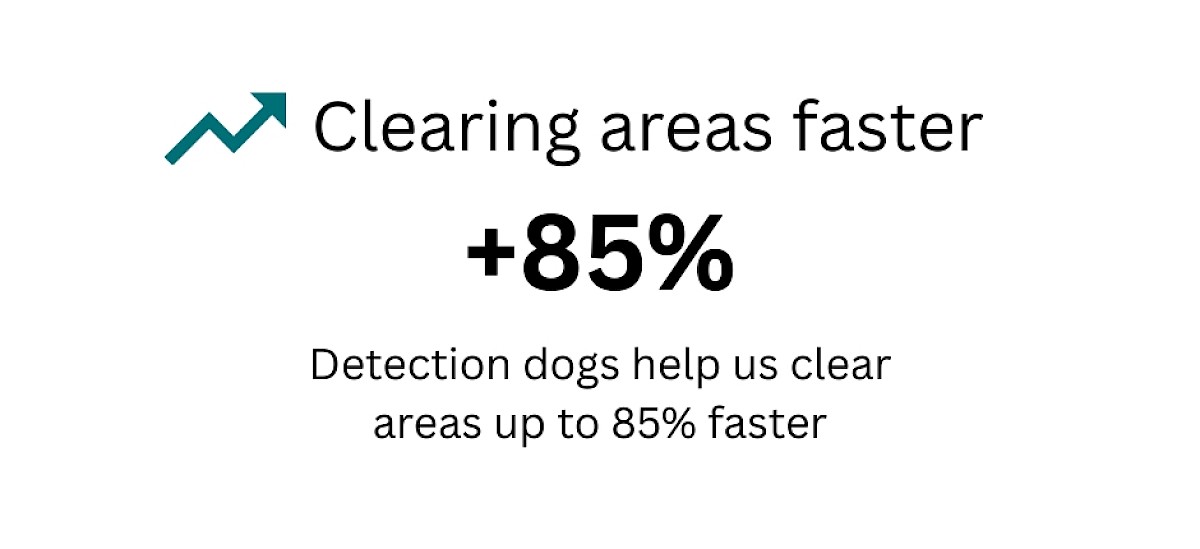
In partnership with Zero Invasive Predators (ZIP), we trialled their H2Zero units in an urban environment. ZIP wanted to see how their technology would perform in Wellington’s conditions: places where dogs, children and the public might access. The H2Zero units slowly release Rodenthor Gel (a New Zealand-registered brodifacoum bait) over weeks or months, giving fresh bait without our team having to visit. The prototype we trialled can run for three months between services instead of the usual fortnight – an 85% reduction in servicing visits.
 We trialled the H2Zeros on ZIP’s Lola (‘low labour’) bait tunnels in Mt Victoria. We also pointed trail cameras at the stations to understand the rat population – starting four weeks before baiting to establish a baseline.
Bait stations were laid out on a 50 × 50 m grid, with additional stations added later in rat-prone habitats. Initially we checked these H2Zero units every four weeks, then extended this to 10+ weeks as we refined the approach.
What we learned
The trial revealed what worked, what needed fixing, and what matters most for effective rat elimination:
- Habitat knowledge beats grid spacing every time. Our initial 50 × 50 m grid (125 devices) looked good on paper but didn’t quite connect on the ground. Camera data showed ratty areas which needed more attention. We added 38 extra stations in these areas – applying our understanding of where rats actually live and move. After this, the population dropped to zero.
- Technology needs field-testing to work reliably. The H2Zero canisters initially seized after four weeks, requiring us to work with ZIP on improvements (which was expected given the prototype status). Once resolved, the devices operated effectively for the full ten-week period we were aiming for.
- Monitoring drives smarter decisions. Camera data showed us exactly where rats remained active, allowing us to focus on hotspots rather than treating all areas equally across the full timeframe of the trial. This targeted approach ultimately removed the population.
- Monitoring data confirms H2Zero can eliminate rats. 60% of cameras detected rat activity before any bait was placed – our baseline resident rat population. Midway through the trial, activity dropped to just 10% of cameras. By the end: 0% showed any rat activity.
- Rodenthor Gel performs similarly to other brodifacoum bait. Rats found the gel bait attractive and as effective as brodifacoum in traditional forms.
- Tunnel design matters. The ZIP bait tunnels proved their value throughout this trial. Comparing data from September 2024 to 2025, rats were twice as likely to take bait from these tunnels than from a closed device.
What this means
The H2Zero unit adds another tool to our kit. When functioning effectively, these devices can remain in the field for up to three months, continuously dispensing fresh bait – an 85% reduction in servicing visits compared to traditional fortnightly schedules. This could significantly reduce labour costs, allows us to cover a much larger area with our field team, and help us scale faster across the city.
New technology can help drive efficiency towards predator freedom, but it’s not a plug and play. Success depends on combining new tools with field knowledge, monitoring, and willingness to adapt. The partnership approach – working directly with innovators like ZIP to test technology in urban conditions – accelerates learning for everyone. But it can be frustrating at times too, when the technology doesn’t quite work as planned: so be prepared.
What’s next
We continue to use our standard ‘Pelgar’ bait stations for the bulk of our network. But now we have some new options which could help us scale faster across the city.
With H2Zero’s low service frequency and constant bait availability, this tool could be particularly useful for biosecurity – as a way to protect the gains we are making without overburdening our field team.
ZIP is currently refining a second prototype of the H2Zero which will be able to dispense bait over six months, reducing servicing costs even further.
The real win here is flexibility and options. As we refine our understanding of where each tool delivers the most value, we’re building a toolkit that’s both effective and affordable – crucial for any project looking to replicate our work.
Monitoring camera footage showing a rat entering a ZIP bait tunnel
Posted: 9 March 2026