Predator Free Wellington
  • Our project
    • Our project
    • News
    • FAQs
    • Knowledge hub
    • Meet our team
    • Our impact
    • Our progress
    • Our supporters
    • Contact us
    • Impact dashboard
  • Sign up – Phase 2
    • Phase 2
    • Phase 2 volunteering
  • Miramar
  • Trapping
    • Find a trapping group
    • Community heroes
    • Knowledge hub
  • Support us
  1. Home
  2. Our project
  3. News
  4. News article

News article

Call yourself a Kiwi?
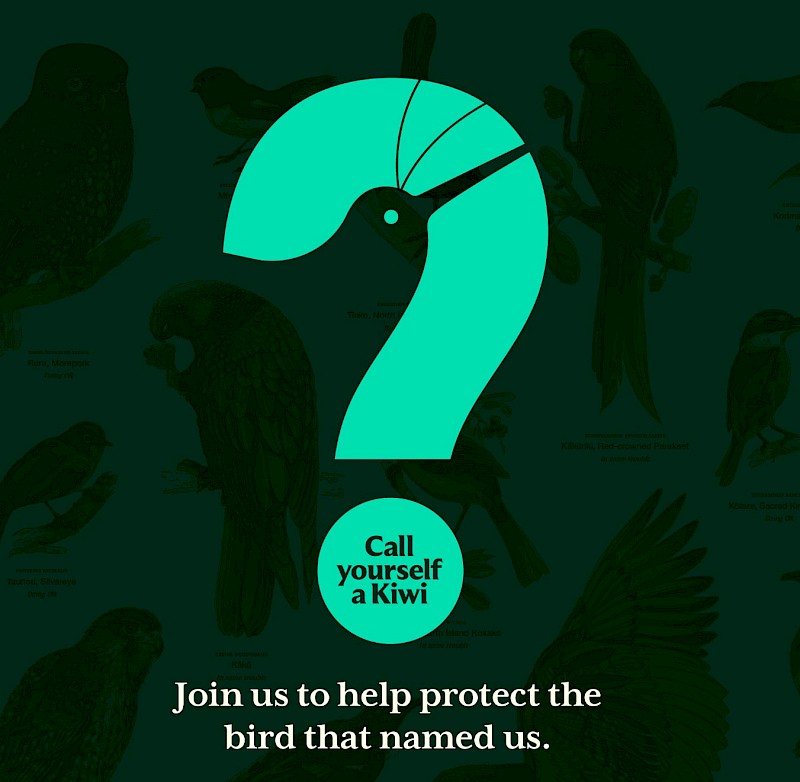
What if our national namesake disappeared? Wild as that sounds, 68,000 native birds, including the kiwi, are killed by predators every night. With over 4,000 species at risk, New Zealand now tops the global endangered species list. That puts our name to shame.

As part of the Predator Free movement, we’re working to protect kiwi and other threatened wildlife, but we need help from everyone who calls themselves a Kiwi. So, we encouraged other Kiwi to do the same. If all six million of us give what we can to protect our native taonga, we can proudly call ourselves Kiwi for generations to come.

Call Yourself a Kiwi was a fundraising campaign that ran during mid 2025.

———

Posted: 18 June 2025

Prev article
All articles
Next article
  • Facebook
  • Instagram
  • LinkedIn
  • Contact us
  • Receive our newsletter

© 2026 Predator Free Wellington • Privacy statement • Website by RS

  • Home
  • Our project
    • Our project
    • News
    • FAQs
    • Knowledge hub
    • Meet our team
    • Our impact
    • Our progress
    • Our supporters
    • Contact us
    • Impact dashboard
      • Native birds are closing the gap on introduced birds on Miramar Peninsula
      • Measuring economic impact
      • The social impact of Predator Free Wellington
      • Why Predator Free Wellington is built on community partnership
  • Sign up – Phase 2
    • Phase 2
    • Phase 2 volunteering
  • Miramar
  • Trapping
    • Find a trapping group
    • Community heroes
    • Knowledge hub
      • Our urban predator free blueprint (2024)
      • Most Significant Change (2025)
      • Return on investment (2025)
      • The value of volunteers (2024)
      • Habitat preferences of Ship rats (2023)
      • Social-ecological research (2022)
      • People, nature and wellbeing (2020)
      • Predator Free Miramar: How to kill rats and engage a community (2019)
      • Biosecurity: Rat or mouse?
      • Biosecurity: Rat or wētā droppings?
      • Biosecurity: Chew marks and chew cards
      • Biosecurity: Tracking tunnels and prints
      • How to get trapping (guide)
      • How to build a trapping tunnel
      • How to rat proof your compost
      • How to make a wētā hotel
      • How to build a corflute trapping tunnel
      • H2Zero trial – case study
      • Improving our biosecurity – case study
      • Using dog detectors early – case study
      • How to maintain your Victor rat trap
      • How to run a tunnel building workshop
      • Conceiving an unfenced urban ecosanctuary at Mātai Moana (2024) – external link
      • Estimating the impact of Predator Free Wellington on tree wētā (2025) – external link
      • Assessing the effects of predator control and habitat on lizards in an urban landscape (2025) – external link
      • Webinar - Analysis of Predator Free Wellington data from Miramar (2024)
  • Support us
  • Facebook
  • Instagram
  • LinkedIn
  • Newsletter signup
  • Search...