
Chew marks
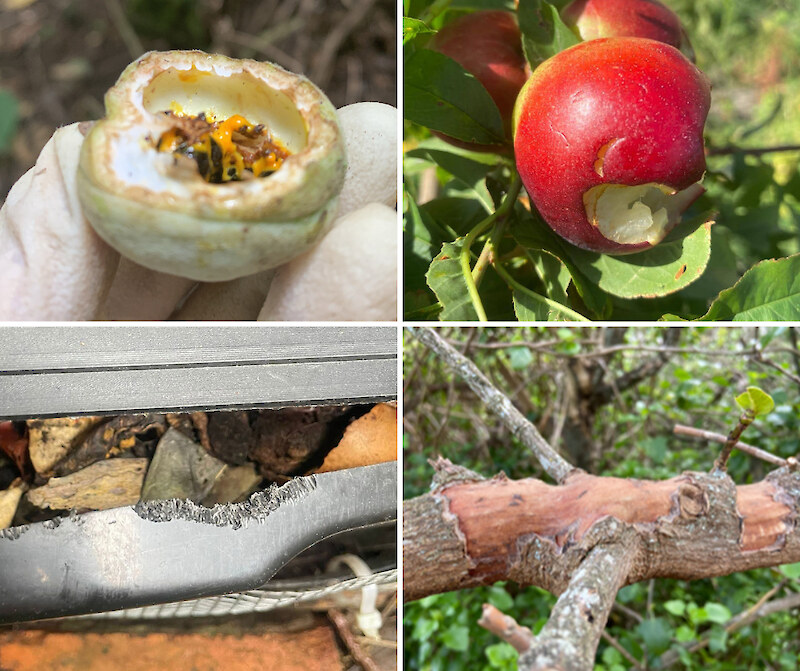 Clockwise from top left: Rat chew on karo seed; possum chew on nectarines; rat chew on tree branch; rat chew on compost binChew marks can show you if there are rats or possums around your place. Some signs you might see are:
- chewed fruit, vegetables or trees
- tooth marks on your compost bin or tunnels through the compost
- chewed pieces of outdoor wood
If you see these (or rats, droppings, etc) please report them! You can let us know with our online form or call 0800 NO RATS (667 287). See what each animal’s tooth marks look like below.
Chew cards
Chew cards are a safe and useful tool to understand if predators are around. Their tooth marks will reveal which animal was chewing! This is a great way to decide where to put your backyard trap or tell if rats have snuck back into rat-free areas. Chew cards are pieces of corflute card, with grooves filled with peanut butter (non-toxic lure) – when predators bite down on the card it captures their bite marks.
Installing chew cards
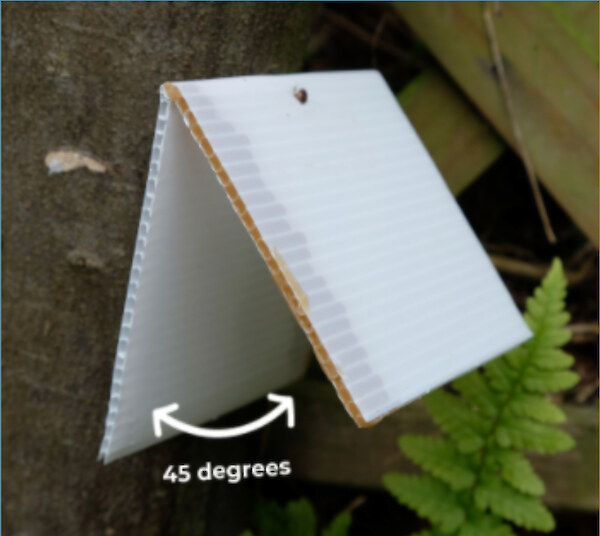
Place the cards in areas where you suspect rat activity, for example, near your compost or rubbish bins. Nail the card to a nearby tree or fence (about 5-10cm off the ground) to keep it secure. We suggest leaving it out for five to seven nights.
Identifying bite marks
Rats
Rats typically chew large parts of the baited portions of the card. There will likely be ‘m’-shaped bites and around 2mm wide. Both edges of the card are chewed through cleanly. There will often be bits of ‘confetti’ – pieces of chewed card.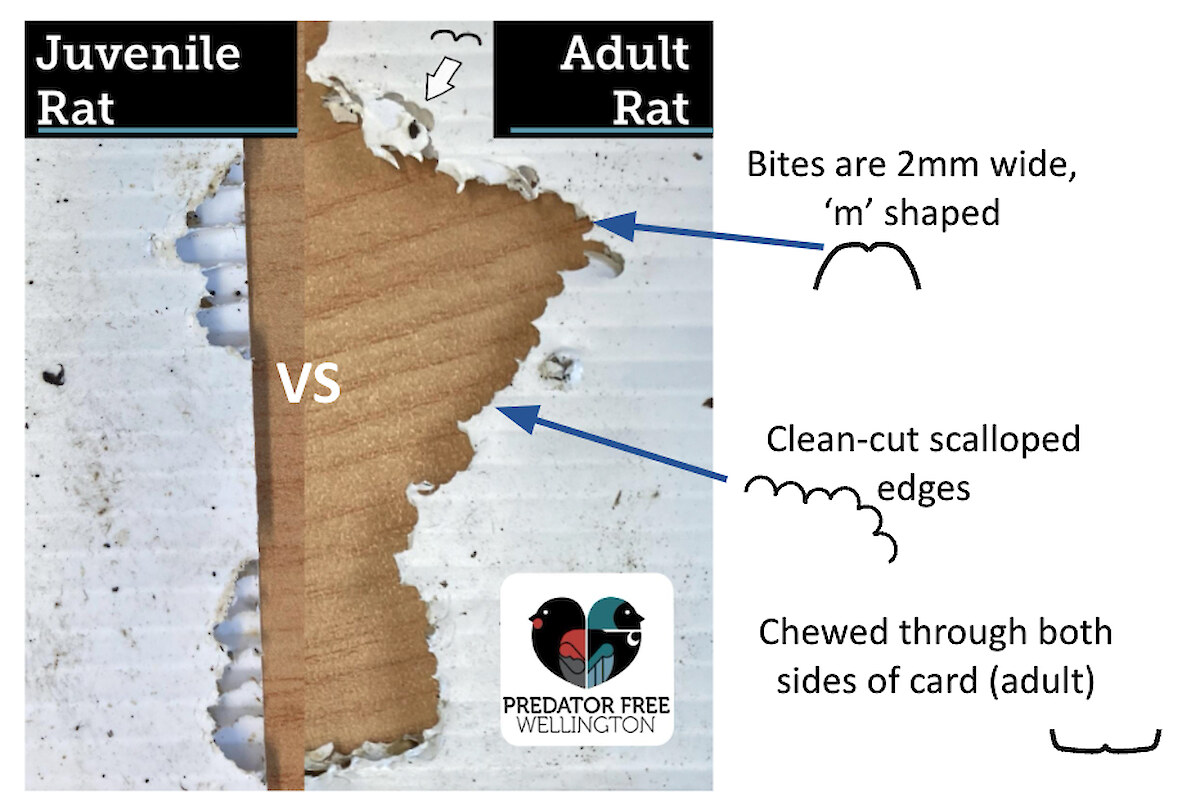
Mice
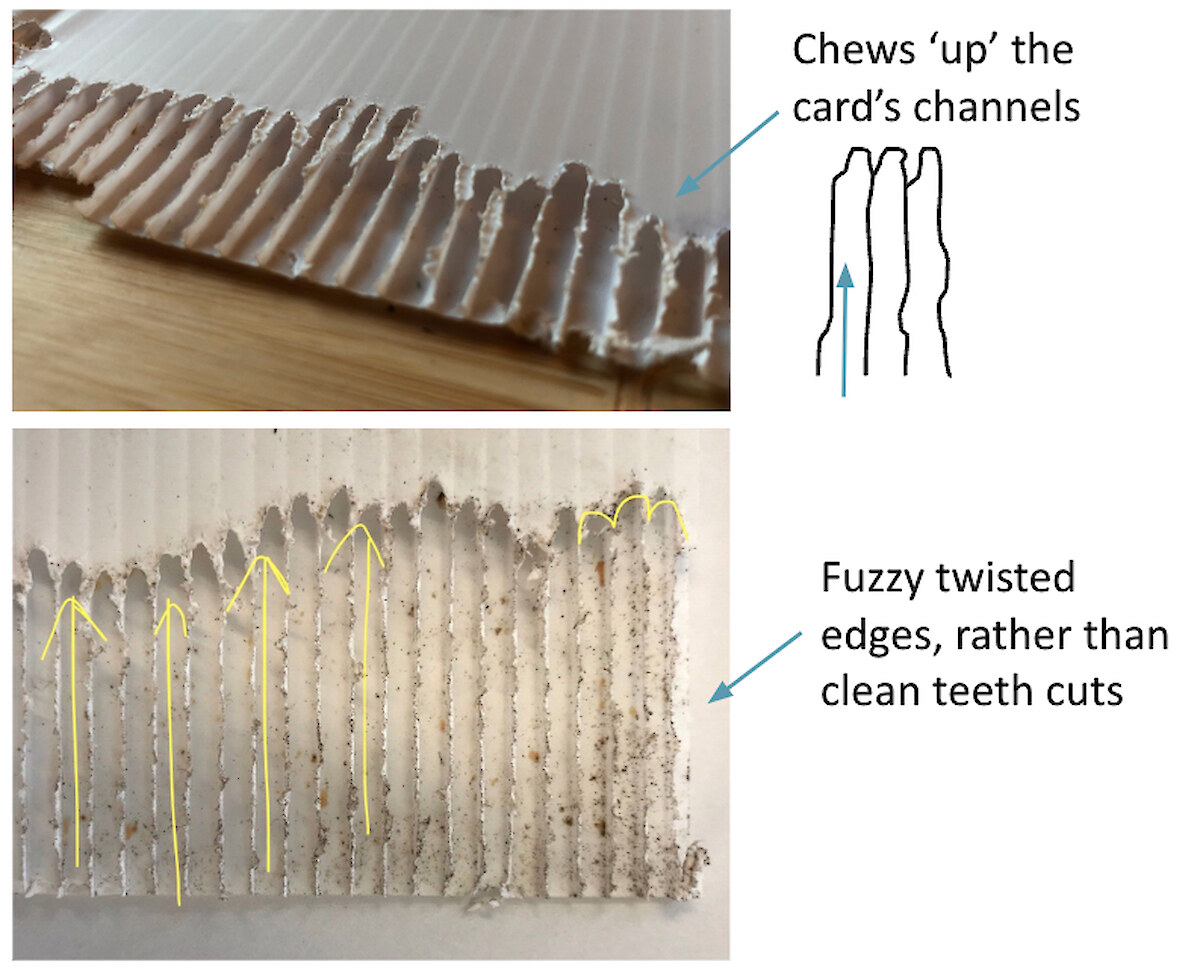
Mice usually chew between the channels on one side of a card, with fuzzy twisted edges rather than clean tooth marks.
Stoats, weasels and cats
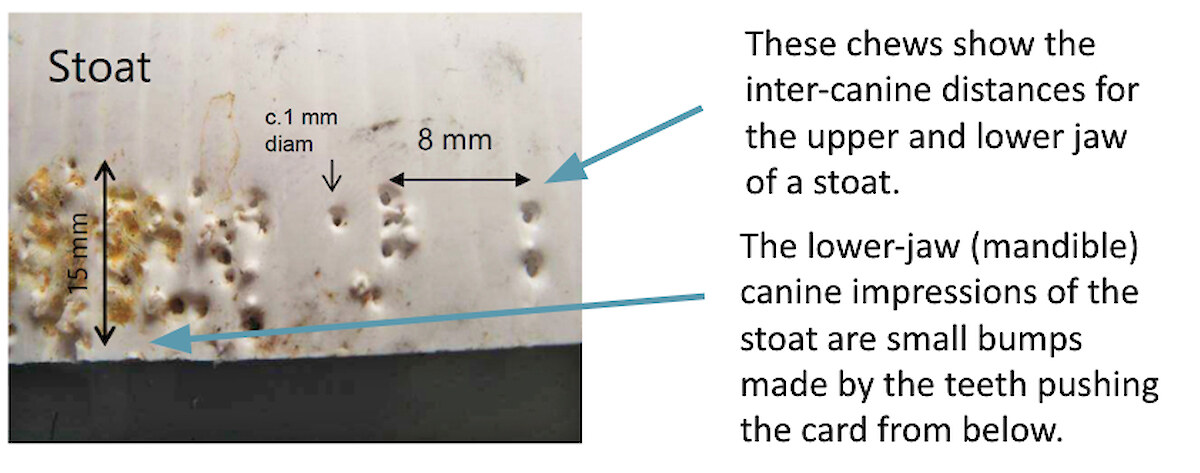
Stoats, weasels and cats all leave paired, circular canine puncture marks, top and bottom.
Possums
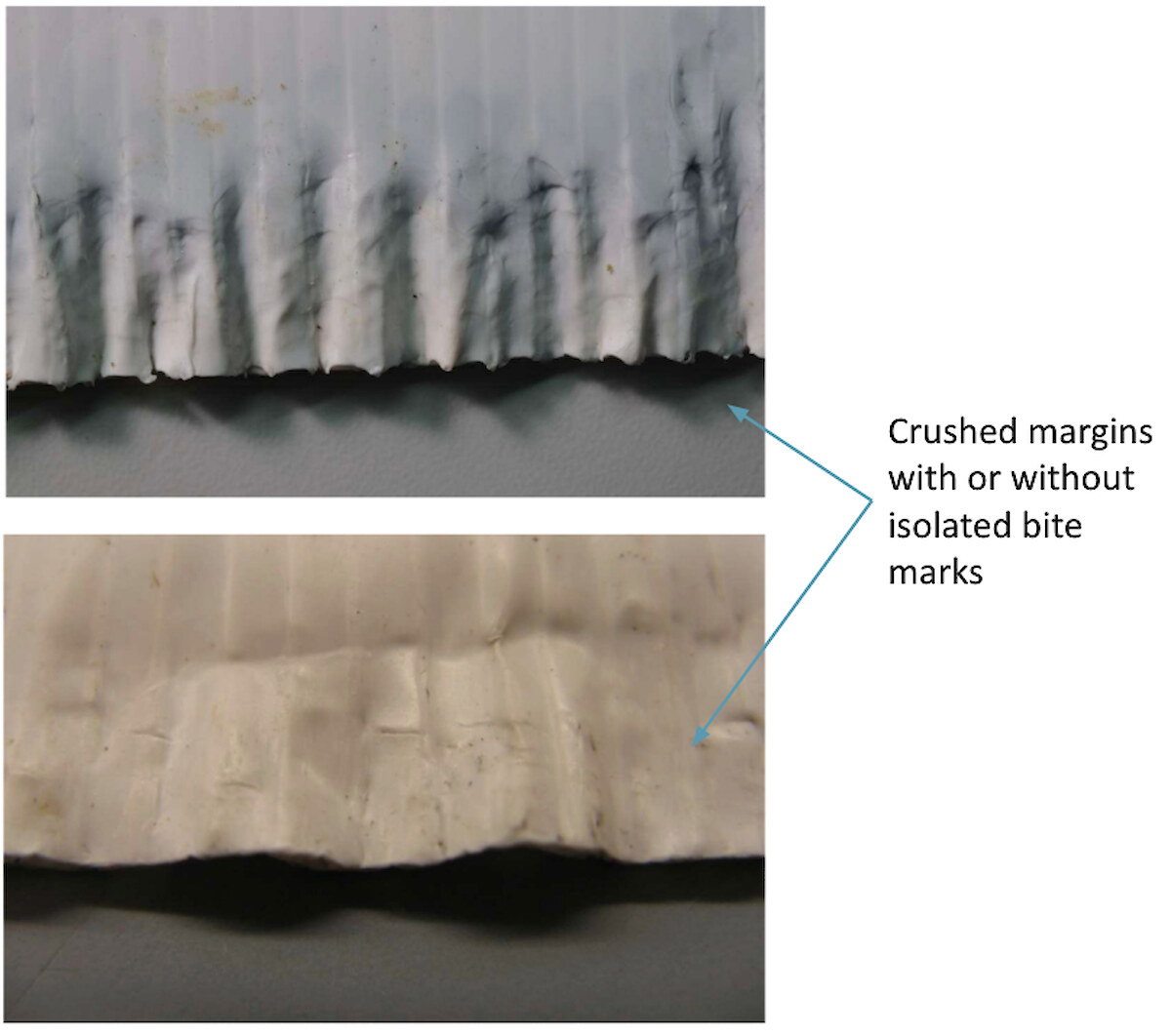
Possums leave crushed margins that can sometimes look like water damage. They can also leave moustache shaped teeth marks that are 5-7mm wide. Biting and crushing can extend well beyond the baited portions of the card.
Hedgehogs
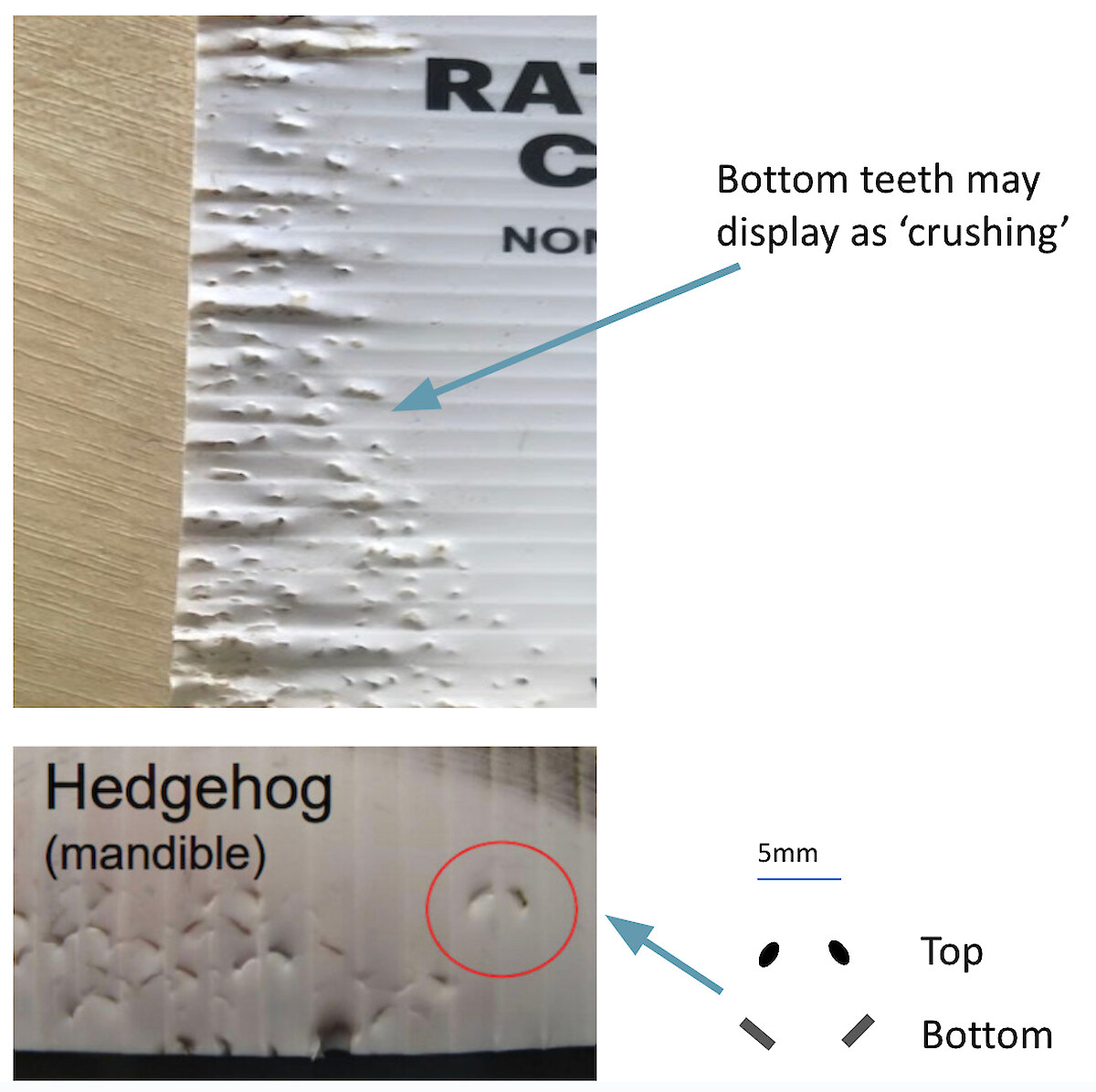
Hedgehogs leave both circular puncture marks and blunt lower jaw incisor impressions.
Thanks to Manaaki Whenua Landcare Research and Predator Free Dunedin.