Predator Free Wellington
  • Our project
    • Our project
    • News
    • FAQs
    • Knowledge hub
    • Meet our team
    • Our impact
    • Our progress
    • Our supporters
    • Contact us
  • Sign up – Phase 2
    • Phase 2
    • Phase 2 volunteering
  • Miramar
  • Trapping
    • Find a trapping group
    • Community heroes
    • Knowledge hub
  • Support us
  1. Home
  2. Trapping
  3. Knowledge hub
  4. Social-ecological research (2022)

Social-ecological research (2022)

Collective action to eradicate rats and mustelids from a large, peopled landscape: A social-ecological approach

Dr Julie Whitburn and Dr Danielle Shanahan from Zealandia Te Māra a Tāne researched and wrote this report. They worked with us and the Biological Heritage National Science Challenge.
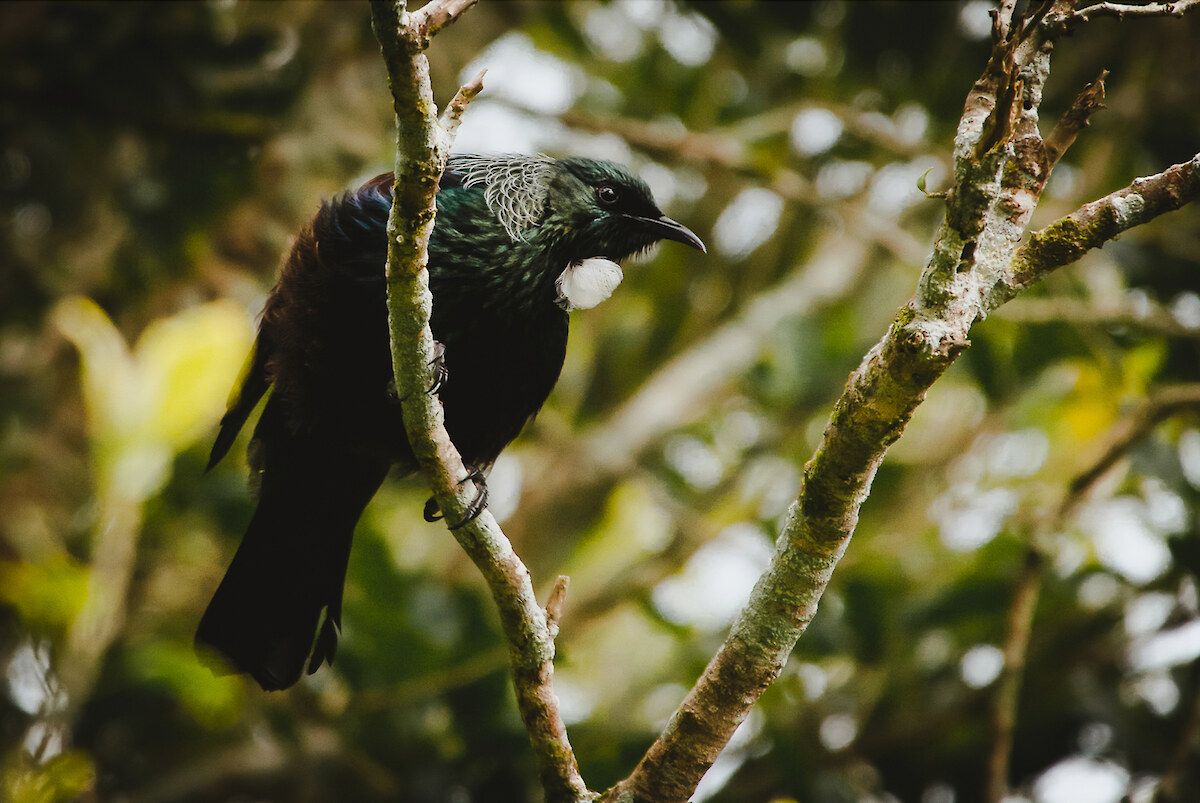
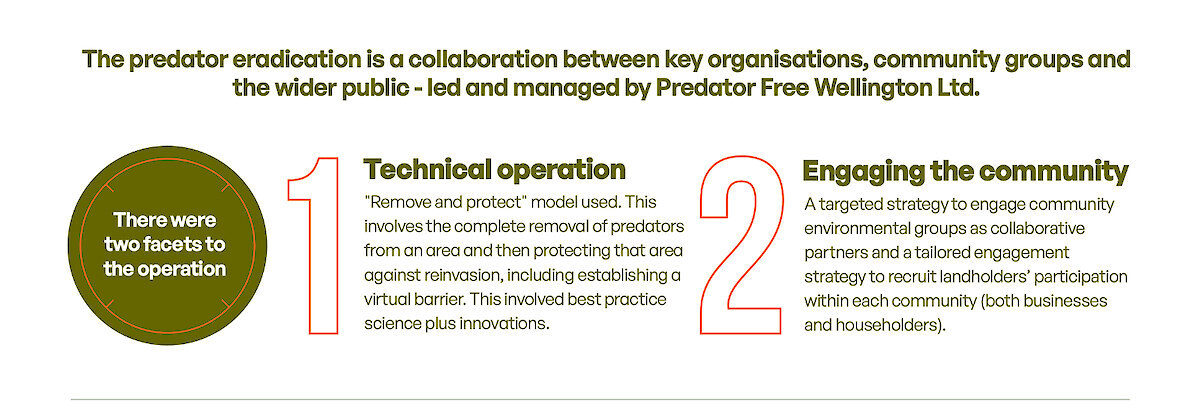
Our project on the Miramar Peninsula had two equally important parts – technical and community engagement.

Our technical plan was a ‘remove and protect’ model, moving through the project phase by phase. We also worked with the community: sharing our project, engaging with local groups and connecting with residents.

This study explored:

  1. What could be learned from our project, in terms of social and ecological impacts
  2. The evidence of social and ecological outcomes resulting from the project

Evidence for key ecological outcomes:

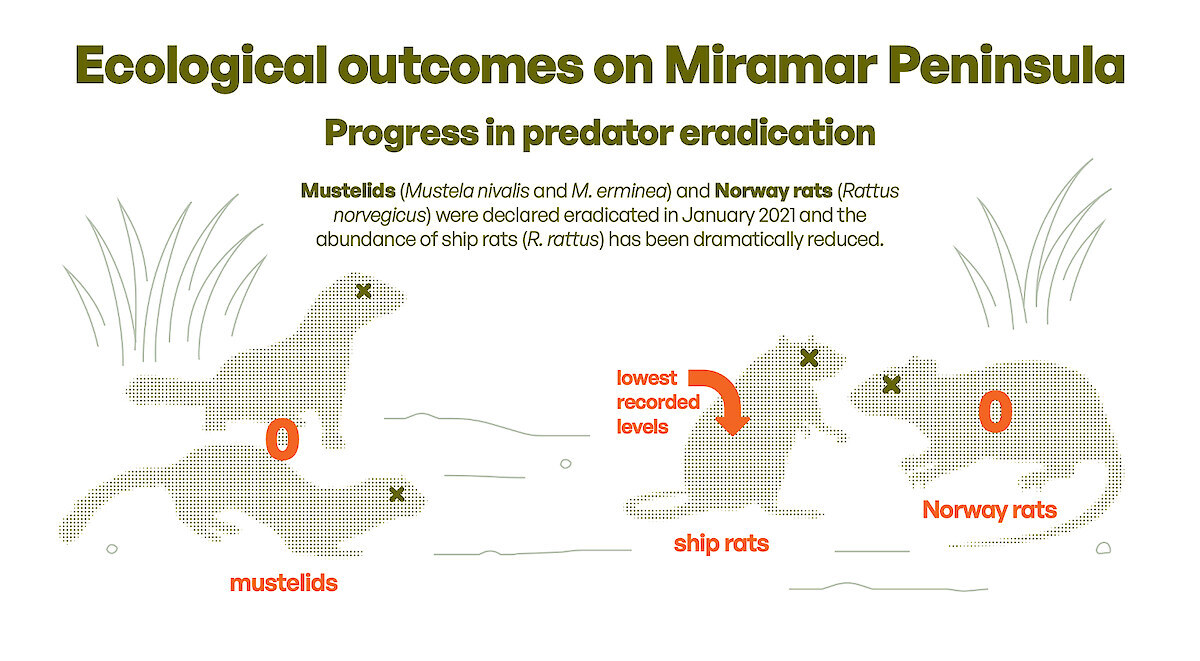
  • Introduced species are on the decline – Miramar now has zero Norway rats and mustelids*
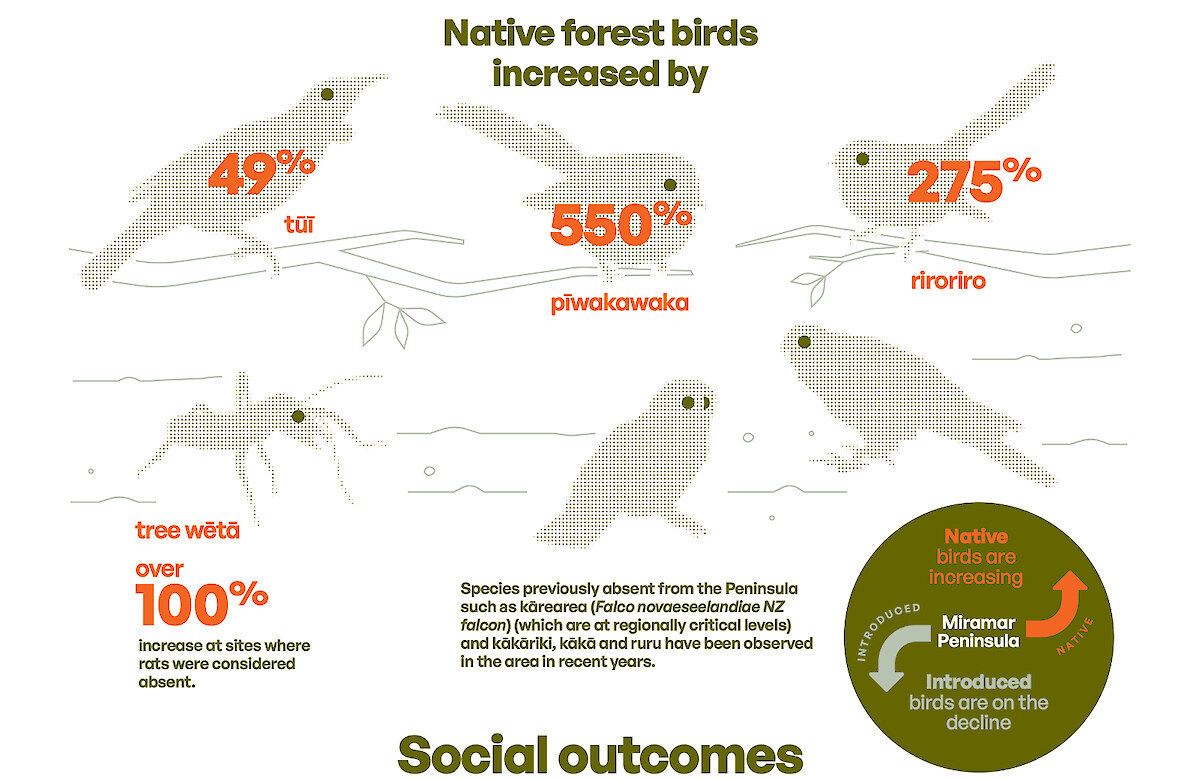
  • Native species are increasing – native birds previously rare on the Peninsula have been observed in recent years. This includes kārearea New Zealand falcon, kākāriki, kākā and ruru.

Evidence for key social outcomes:

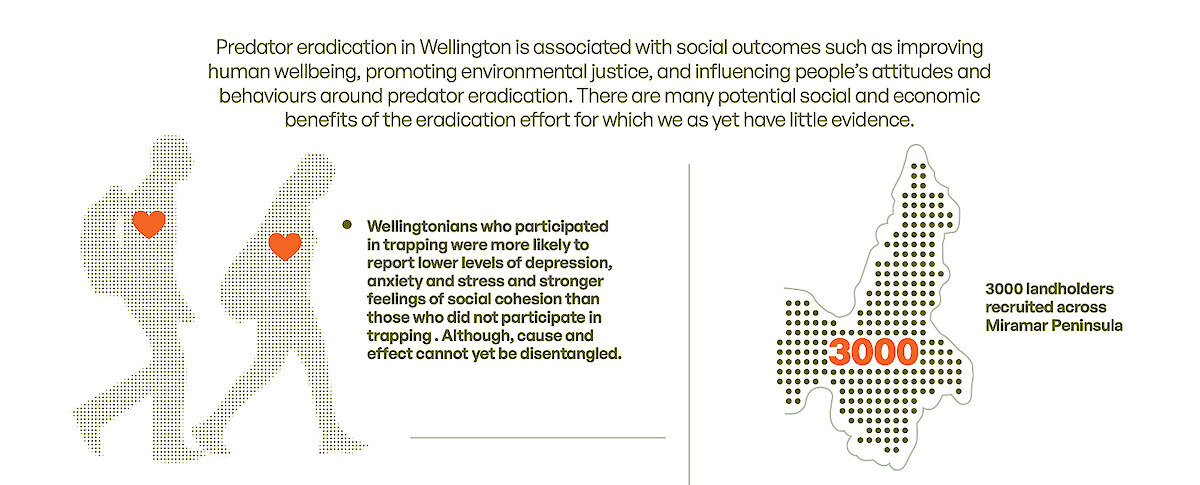
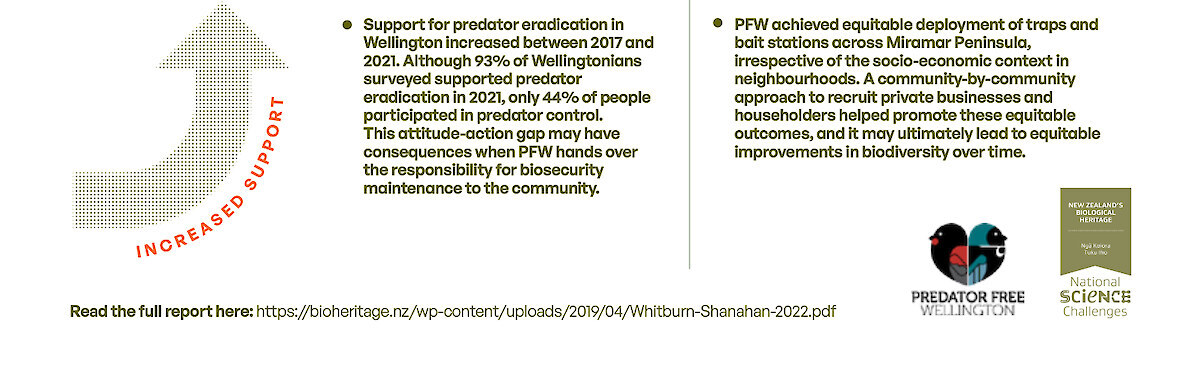
  • People who participated in trapping were more likely to report lower levels of depression, anxiety and stress and stronger feelings of social cohesion than those not involved.
  • Support for predator eradication in Wellington increased between 2017 and 2021.
  • Our project placed traps and bait stations equitably across the Peninsula; it wasn’t confined to certain neighbourhoods. Everyone, regardless of socio-economic status, could participate in our project.

This infographic summarises these findings and you can read the full report here.
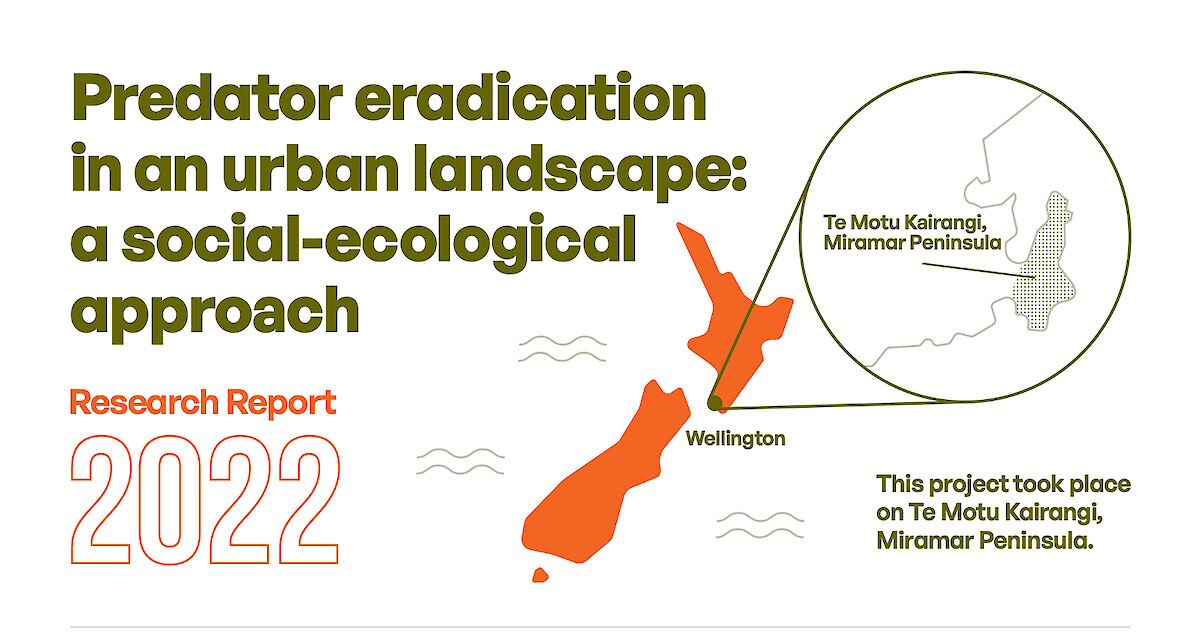
*This was in 2022. Ship rats were also removed from the Peninsula in November 2023. Possums were removed in the early 2000s.

  • Facebook
  • Instagram
  • LinkedIn
  • Contact us
  • Receive our newsletter

© 2026 Predator Free Wellington • Privacy statement • Website by RS

  • Home
  • Our project
    • Our project
    • News
    • FAQs
    • Knowledge hub
    • Meet our team
    • Our impact
    • Our progress
    • Our supporters
    • Contact us
  • Sign up – Phase 2
    • Phase 2
    • Phase 2 volunteering
  • Miramar
  • Trapping
    • Find a trapping group
    • Community heroes
    • Knowledge hub
      • Our urban predator free blueprint (2024)
      • Most Significant Change (2025)
      • Return on investment (2025)
      • The value of volunteers (2024)
      • Habitat preferences of Ship rats (2023)
      • Social-ecological research (2022)
      • People, nature and wellbeing (2020)
      • Predator Free Miramar: How to kill rats and engage a community (2019)
      • Biosecurity: Rat or mouse?
      • Biosecurity: Rat or wētā droppings?
      • Biosecurity: Chew marks and chew cards
      • Biosecurity: Tracking tunnels and prints
      • How to get trapping (guide)
      • How to build a trapping tunnel
      • How to rat proof your compost
      • How to make a wētā hotel
      • How to build a corflute trapping tunnel
      • H2Zero trial – case study
      • Improving our biosecurity – case study
      • Using dog detectors early – case study
      • How to maintain your Victor rat trap
      • How to run a tunnel building workshop
      • Conceiving an unfenced urban ecosanctuary at Mātai Moana (2024) – external link
      • Estimating the impact of Predator Free Wellington on tree wētā (2025) – external link
      • Assessing the effects of predator control and habitat on lizards in an urban landscape (2025) – external link
      • Webinar - Analysis of Predator Free Wellington data from Miramar (2024)
  • Support us
  • Facebook
  • Instagram
  • LinkedIn
  • Newsletter signup
  • Search...