Predator Free Wellington
  • Our project
    • Our project
    • News
    • FAQs
    • Knowledge hub
    • Meet our team
    • Our impact
    • Our progress
    • Our supporters
    • Contact us
  • Sign up – Phase 2
    • Phase 2
    • Phase 2 volunteering
  • Miramar
  • Trapping
    • Find a trapping group
    • Community heroes
    • Knowledge hub
  • Support us
  1. Home
  2. Trapping
  3. Knowledge hub
  4. How to rat proof your compost

How to rat proof your compost

Keep your compost and native wildlife safe

Do you live in a rat-free area and have seen tunnels in your compost, or chew marks on the bin? Please get in touch with us! Report this online or call 0800 NO RATS (0800 667 287).

Home compost bins often have an open bottom. This means rats and mice can easily burrow into a food buffet before moving on to our native animals. Luckily it’s easy to ‘rat proof’ your bin.

Materials you’ll need:

  • Gloves
  • Safety glasses
  • Galvanised wire mesh, approximately 1.25m x 1.25m to cover the bottom and lower sides of the bin. Mesh holes should be 1.25cm max (mice and rats can squeeze through anything bigger). Stainless steel would last longer and be less prone to rust but is more expensive and can be hard to find.
  • Around 20 cable ties
  • Pliers or tin snips

Step 1 – lay out the wire mesh

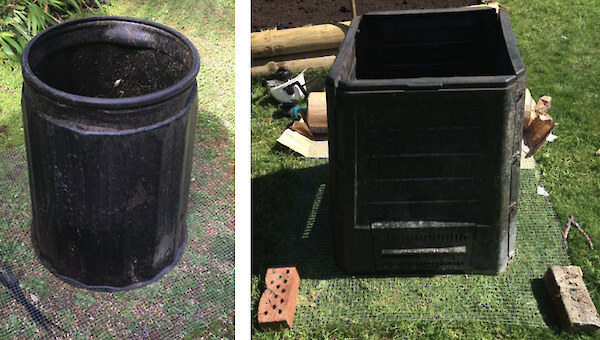
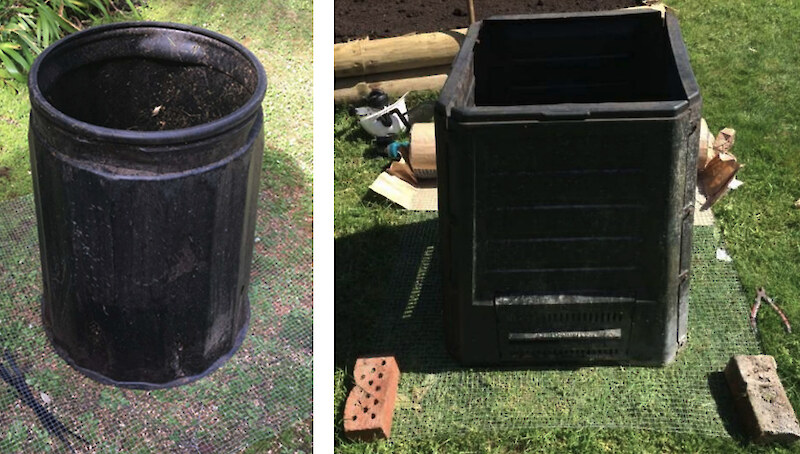
If your mesh is in a roll, it will spring back when you let it go. Weigh down the edges with bricks or pieces of wood while you work. Place your bin on top. Ideally you’ll have 10-20 cm extra on each edge (or enough to cover any air holes, doors or flaps where rats can get in).
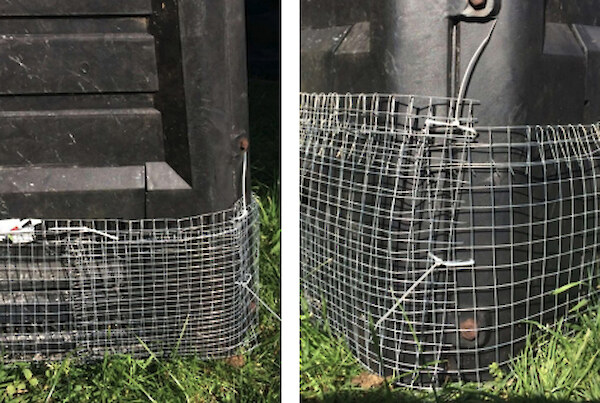
Step 2 – fold and wrap the wire mesh

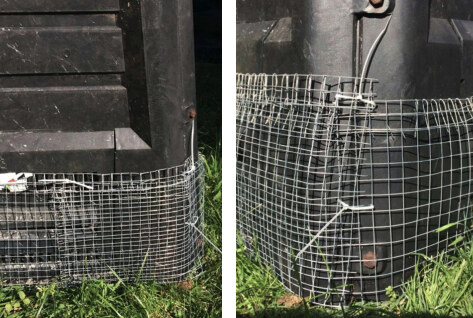
Fold the mesh up one side at a time. Each fold should be close to the bottom edge of the bin and extend up the sides. You can fold overlapping bunches of the mesh together (and cable tie them later).

You can also use tin snips or pliers to cut out sections of mesh so it doesn’t bunch together.
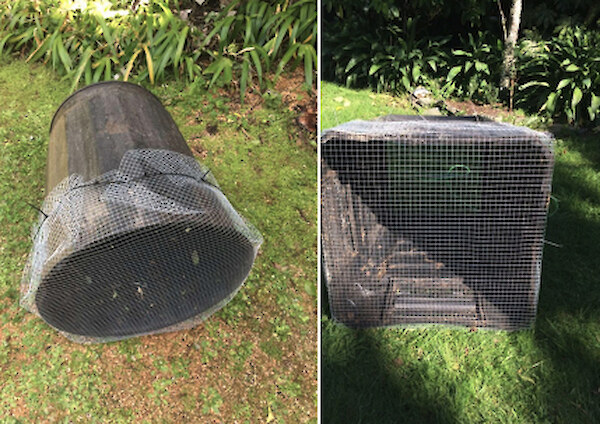
Step 3 – cable tie everything

Cable-tie bunches of mesh together. Or you can connect cable ties into a long string, weave it through the mesh and around the whole bin, then connect the cables. Make sure the air holes are completely covered.

Keep the ties loose until you’re ready to tighten them all. The mesh should sit tight against the sides of the bin, so no rats can squeeze in. You might like to trim the cable ties.

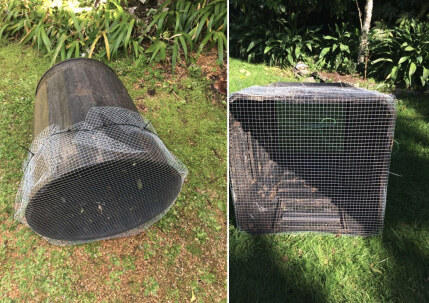
All done! Your compost bin will still smell delicious to rats, so it’s a good place for your trap.

  • Facebook
  • Instagram
  • LinkedIn
  • Contact us
  • Receive our newsletter

© 2026 Predator Free Wellington • Privacy statement • Website by RS

  • Home
  • Our project
    • Our project
    • News
    • FAQs
    • Knowledge hub
    • Meet our team
    • Our impact
    • Our progress
    • Our supporters
    • Contact us
  • Sign up – Phase 2
    • Phase 2
    • Phase 2 volunteering
  • Miramar
  • Trapping
    • Find a trapping group
    • Community heroes
    • Knowledge hub
      • Our urban predator free blueprint (2024)
      • Most Significant Change (2025)
      • Return on investment (2025)
      • The value of volunteers (2024)
      • Habitat preferences of Ship rats (2023)
      • Social-ecological research (2022)
      • People, nature and wellbeing (2020)
      • Predator Free Miramar: How to kill rats and engage a community (2019)
      • Biosecurity: Rat or mouse?
      • Biosecurity: Rat or wētā droppings?
      • Biosecurity: Chew marks and chew cards
      • Biosecurity: Tracking tunnels and prints
      • How to get trapping (guide)
      • How to build a trapping tunnel
      • How to rat proof your compost
      • How to make a wētā hotel
      • How to build a corflute trapping tunnel
      • H2Zero trial – case study
      • Improving our biosecurity – case study
      • Using dog detectors early – case study
      • How to maintain your Victor rat trap
      • How to run a tunnel building workshop
      • Conceiving an unfenced urban ecosanctuary at Mātai Moana (2024) – external link
      • Estimating the impact of Predator Free Wellington on tree wētā (2025) – external link
      • Assessing the effects of predator control and habitat on lizards in an urban landscape (2025) – external link
      • Webinar - Analysis of Predator Free Wellington data from Miramar (2024)
  • Support us
  • Facebook
  • Instagram
  • LinkedIn
  • Newsletter signup
  • Search...