
Detection dogs leading the way – clearing areas 85% faster
This case study was first published in our 2024/25 impact report
The challenge
Every operational improvement we make compounds across thousands of properties. If we can reduce the number of services needed to clear each project zone, that scales into weeks saved across suburbs.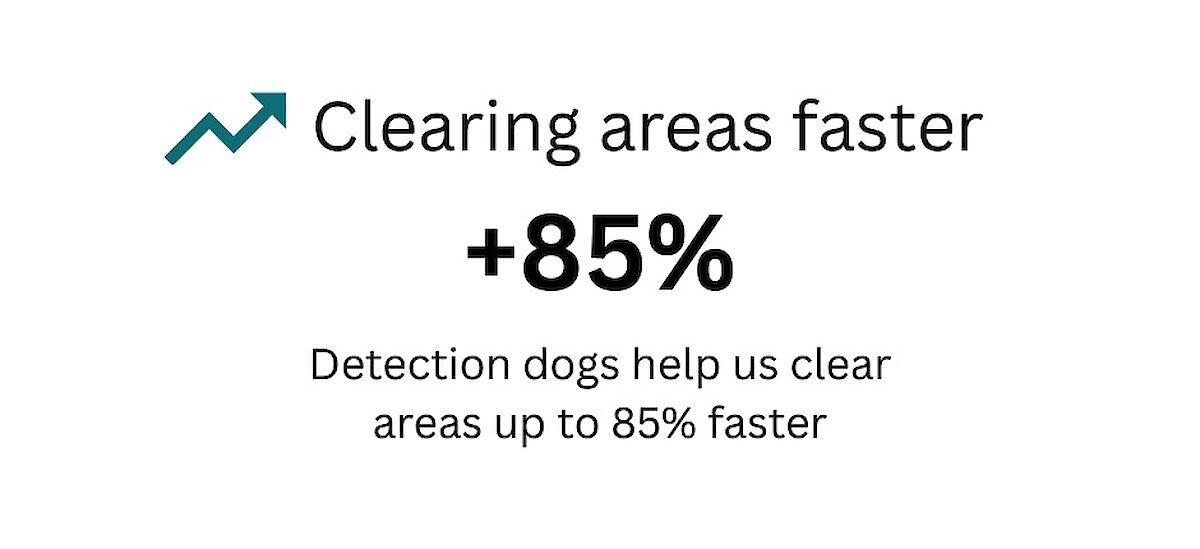
Our approach
We completely flipped our processes this past year. Traditionally, detector dogs came in at the end – a final sweep to find any remaining rats we’d missed. Now our detector dog team (Sally Bain and dogs Rapu and Kimi) survey zones before our field team arrives.
This give us a strong early indication of where rats are living, feeding, and moving – sometimes revealing just how ratty certain areas are, particularly older housing with countless nooks and crannies offering rats hiding spots and food sources.
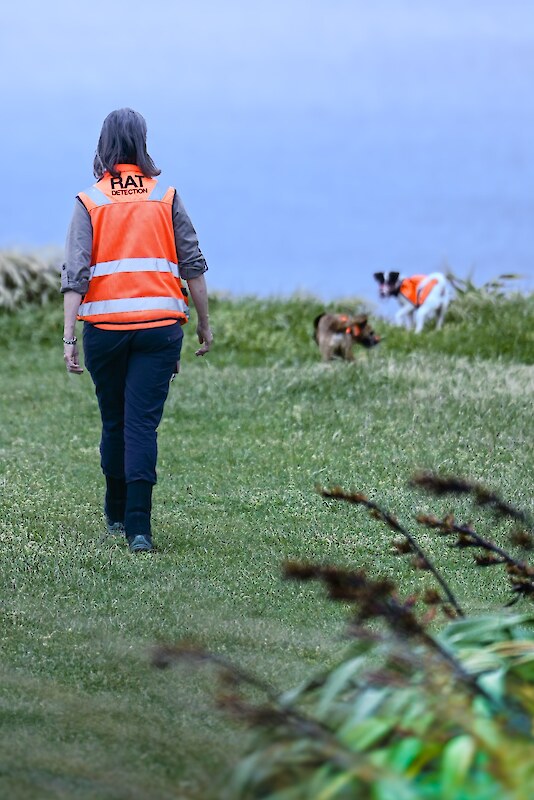 Dog detection information goes straight into Trap.NZ, giving our field team a detailed picture before they place a single device. They can see rats’ favoured locations, movement pathways, food sources and then target those spots.
It’s about multiple layers and checks, not multiple months of time and dollars.
The impact
The numbers tell the story. We compared Phase 2’s low risk areas in Newtown against Phase 1’s Miramar flats – similar suburban habitat, similar starting rat activity. In Miramar flats, we serviced the area weekly for six months, with devices averaging 20 visits each before areas moved into monitoring. At roughly 10 minutes per device visit, that’s 200 minutes of field time per device.
In Newtown, some sections moved into monitoring after just three services. That’s an 85% reduction in device visits – a valuable efficiency gain in both time and cost.
We also decreased servicing frequency. Some Newtown sections went straight to fortnightly visits instead of our usual weekly schedule for 3-4 weeks, and we adjusted device spacing based on what the dogs told us about actual rat presence.
Compare this to steeper, vegetation-heavy zones in Mt Victoria, where dog surveys indicated high rat presence. We responded by increasing device density, and some of these areas only required 6-9 services before moving into monitoring.
This isn’t just about speed. It’s about precision. We’re placing devices where rats actually are, rather than blanketing entire areas and hoping for the best. We’re reading the landscape through the dogs’ and our team’s expertise, making real-time decisions about device density and servicing frequency based on actual rat presence, not assumptions.
Posted: 5 January 2026