
Let’s crow about soaring bird numbers in the capital
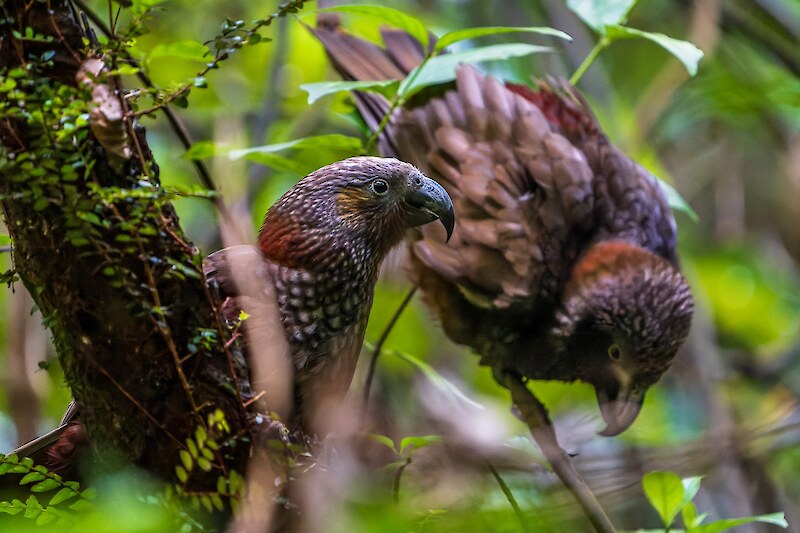 Kākā, photographed by Scott LangdaleThe eagerly anticipated annual bird monitoring survey results are in, and our native species are flying high in the capital thanks to years of collaboration, volunteer work and decreasing predator activity.
Five-minute bird counts have been carried out at 100 permanent count-stations across Wellington city reserves since 2011, monitoring trends in diversity, abundance and distribution of native forest birds. Native birds outnumber introduced birds across Pōneke parks and reserves.
The most significant changes are with kārearea / New Zealand falcon encounter rates increasing from just one sighting a year, to up to six per year since 2021.
Previously reported declines in the average annual counts of tauhou / silvereyes and pīpīwharauroa / shining cuckoos are also in the process of stabilising following years of decline due to urbanisation and predator activity.
Predator Free Wellington Phase 2 will add further intensification in the wider animal pest control network which will lead to increases in the number of native birds we encounter and their distribution across the city.
Over 100,000 native plants have also been added to our reserves through the restoration programme each year, providing habitat, more food and safe nesting sites for our feathered friends too.
Since 2011, there have been substantial increases in the average annual counts of kererū (a 243% increase), kākā (a 170% increase), tūī (a 93% increase) and pīwakawaka / New Zealand fantails (a 37% increase).
The annual monitoring report provides useful information and demonstrates how successful the many Council-supported environmental and ecological initiatives and projects are, says Urban Ecology Manager, Daniela Biaggio.
“These results suggest that the presence of large ‘source’ populations of native forest birds in Zealandia Te Māra a Tāne, together with increasing predator control being carried out in Pōneke, is driving spectacular recoveries in several previously rare or locally extinct native forest bird species in the city.
“A big thanks to every Wellingtonian who is trapping in their home, servicing a line in a reserve, restoring habitat or planting natives in their backyards. Because of your mahi we can now wake to the beautiful call of our native birds rather than the noise of our alarms.”
The increase in the availability of online tools to record natural history observations has also led to a steady increase in the number of citizen science bird observations that are available online.
This data was combined with our more systematic five-minute bird count data to help detect changes in bird distribution in the city over time. To date, residents and visitors to Pōneke have contributed over 299,700 bird observations to online databases and projects like New Zealand eBird, the New Zealand Bird Atlas, iNaturalist and the Great Kererū Count.
Posted: 30 September 2024