
Native birds signal ecosystem recovery on Miramar Peninsula
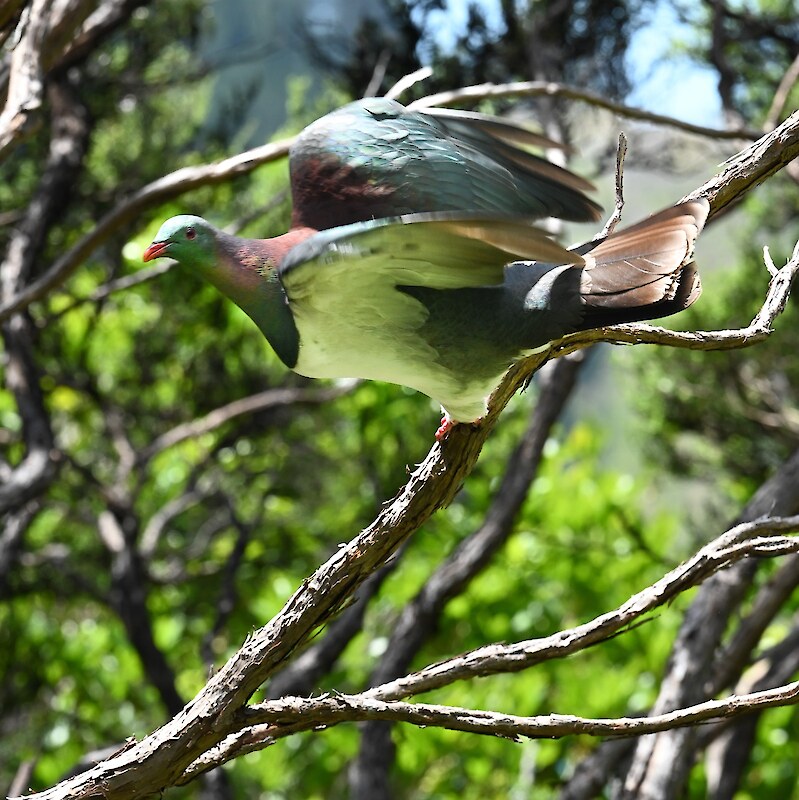 Kererū photo by Tim SuttonNine years of bird monitoring on Miramar Peninsula show a clear shift in Wellington’s urban ecology: native birds are increasing, while introduced species such as blackbirds and sparrows are declining.
What was once a landscape dominated by introduced birds is beginning to rebalance. Native species are not only increasing, but steadily reclaiming space across the peninsula.
“It’s taken less than a decade to start reversing something that’s been the norm for around 150 years,” says James Willcocks, Project Director, Predator Free Wellington.
“But this change is about more than birds. Birds are one of the clearest indicators of ecosystem health in New Zealand. Aotearoa evolved for millions of years with almost no native land mammals. Birds filled many of the ecological roles that mammals occupy elsewhere in the world, so when native bird populations thrive, it’s a sign the wider ecosystem is recovering too.
“On Miramar Peninsula we’re seeing that recovery begin to happen in real time.
“For generations, people grew up thinking blackbirds and sparrows were simply part of the natural background because that’s all they’d known. They didn’t realise what was missing.”
This shift follows the successful elimination of rats and mustelids across the peninsula, removing some of the biggest barriers to native bird survival.
With predators gone, conditions have changed quickly. Native birds are breeding more successfully, spreading into new areas, and establishing in neighbourhoods where they haven’t been seen for generations.
“Now it’s becoming normal to see tūī in flocks, kererū moving between backyards, even kārearea overhead,” says James.
“And species like kākā and kākāriki – long absent from the peninsula – are starting to find their way back across the landscape.
“We’re not looking at a finished job. We’re watching the early stages of a long ecological recovery.”
“I’d never seen a kākā on the peninsula before,” says Te Motu Kairangi (Miramar Peninsula) resident Anne Dowden.
“A couple of weeks ago I spotted one while walking in Seatoun, right in the middle of the day – and then saw it again another five or six times. It’s surreal after only seeing them up close at the sanctuary before now.
“I even got a cool video to share with Predator Free Miramar. It also fits with what I’ve noticed over time. Twenty years ago, seeing a tūī here felt special. Now native birds are turning up in places I never used to see them – even pīwakawaka (NZ fantails) at Breaker Bay beach,” says Anne.
“The really interesting thing in this year’s results is the trajectory,” says ecologist Nikki McArthur, who has led bird monitoring on the peninsula for the past nine years.
“If the current trends continue, native birds will begin to outnumber exotic birds in our Miramar Peninsula bird counts within the next five years.
“That would be a major ecological milestone – and likely the first time this has happened here since the late 1800s.”
But maintaining those gains will rely on continued community effort.
“This is the moment where it really matters,” says James.
“We’ve created the conditions for native birds to come back – now it’s about protecting that progress.
“That means people staying involved, maintaining traps, keeping an eye out for incursions, and looking after the spaces around them.
“These birds are returning because the community made it possible. What happens next is up to all of us.”
Posted: 3 August 2026