
Stoat detector dog gives Miramar a clean bill of health
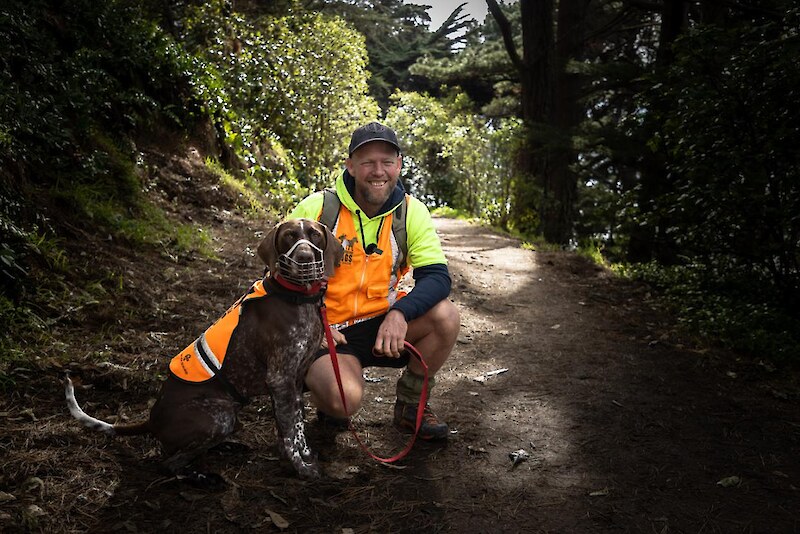 Wero and handler Brad Windust. Photo courtesy The Post / David UnwinThis article was written by Justin Wong for The Post on 30 July 2025. Visit the article for video of Brad and Wero in action.
Wero the dog and his best friend Brad Windust have just completed a sweep of the Miramar Peninsula and Mt Victoria looking for signs of unwanted stoats and weasels.
They were pleased to have picked up none at this check, but Windust said on Tuesday it was a lucky break: “Every female stoat is pregnant from the time it opens its eyes as a baby.
“If one turns up here, you want to catch it as fast as you can to save a bigger problem later on.”
The five-year-old German shorthaired pointer and Windust have been to Wellington’s predator-free Miramar Peninsula several times, including after a stoat was caught on camera and hunted down by volunteers last year.
Wero, one of three dogs in the country certified to detect stoats and weasels – which pose a threat to native birds – had to be called in from the Bay of Islands for the annual biosecurity check by Predator Free Wellington. The capital has locally-based detector dogs but they specialise in rats instead of mustelids.
A detector dog usually takes two years to train and includes teaching them to get into helicopters and boards as well as finding their targets.
But Wero only needed 12 months.
“[Wero] is trained to find mustelid scat, or poo, and then when he finds it, he’ll go down onto the ground and point at it, and then we know that there’s a stoat in the area,” said Windust. “Then the trappers can come in and finish the job.”
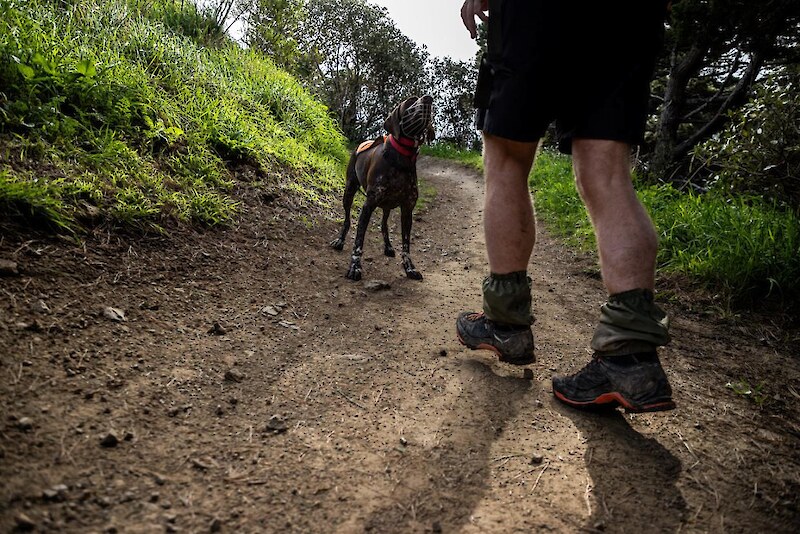 Wero and Brad checking trails on Mt Victoria. Photo courtesy The Post / David UnwinAlthough Predator Free Wellington deployeds a whole host of countermeasures against mustelids, such as chew cards, “meat lover” baits, intensive camera networks and trap monitoring, field officer Meegan Walker said a trained dog’s nose was the final confirmation.
Humans might misjudge a stoat’s bite marks on a chew card to be that of a rat’s, she said, and cameras could only pick up stoats and weasels when they passed through an area. Dogs however could narrow down the exact location.
In Wellington, Wero and Windust concentrated on the shoreline, bushy areas or old buildings, where stoats could likely have left a mark.
“They’ll leave their scat to communicate with other stoats,” he said.
“[Wero] knows where they mark their territory, so he’s always checking those spots as we go. He’s got an amazing nose on him – not much gets past him.”
He said Wellington’s fight against pests was showing results – as demonstrated when he saw eight tūī ganging up and fighting off a kārearea during a recent visit.
“Wellington is the envy of the country,” he said.
Posted: 31 July 2025