
We don’t have to accept the norm: Reflections from Hawaiʻi
By James Willcocks, Predator Free Wellington, Project Director
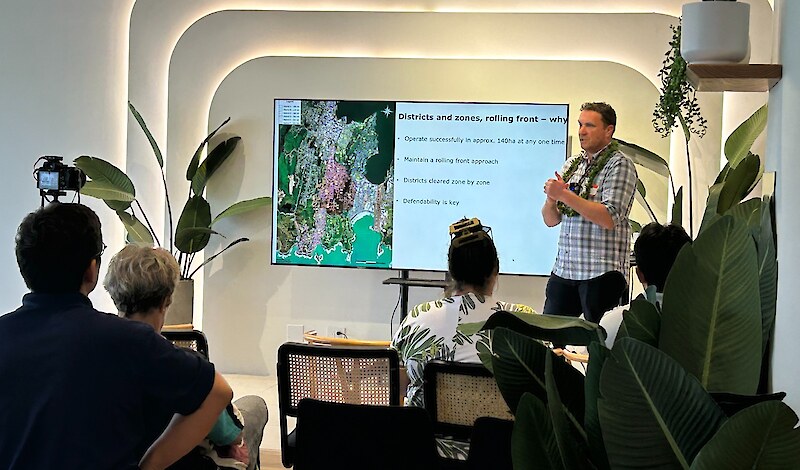 James speaking at a workshop for the Division of Forestry and Wildlife, the Nature Conservancy, staff from the University of Hawaii and researchers.I’ve just got back from Hawaiʻi, and one thought has stuck with me: how lucky we are in Wellington to have communities who’ve stood up and decided what kind of city they want to live in.
We were invited over after presenting on our multi species elimination work at the Island Invasives conference here in New Zealand earlier this year. Hawaiʻi is now looking at what a similar journey might look like for them, and wanted to hear how we did it. I travelled as part of a small delegation representing New Zealand’s predator free mission, alongside Predator Free New Zealand Trust CEO Jessi Morgan.
Arriving in Hawaiʻi, our team did what any Kiwi does before crossing a border: scrubbed our tramping boots and checked our bags for stowaways. At the Hawaiian border, none of that happened. It made me think about how fortunate we are for the hard work of the people on our biosecurity frontline, every day, keeping our country safe.
Hawaiʻi and Aotearoa have a lot in common. Both Pacific island nations, both highly exposed to invasive species. I didn’t know Hawaiʻi has no native land mammals either, bar a sea lion and a bat. A lot of what we’ve learned to deal with in Wellington can transfer directly.
Talking with state agencies, community groups and practitioners on the ground, a few ideas landed. Using natural boundaries like peninsulas to defend against reinvasion. Building commitment from the ground up before legislating, not after. Keeping the message simple: our “no rats, free service” line worked because it gave people one thing to act on, not the whole weight of species decline. Being a genuine enabler: if people want to get involved, let them, don’t tie them up in process. And speaking to economic and social benefits, not just ecological ones.
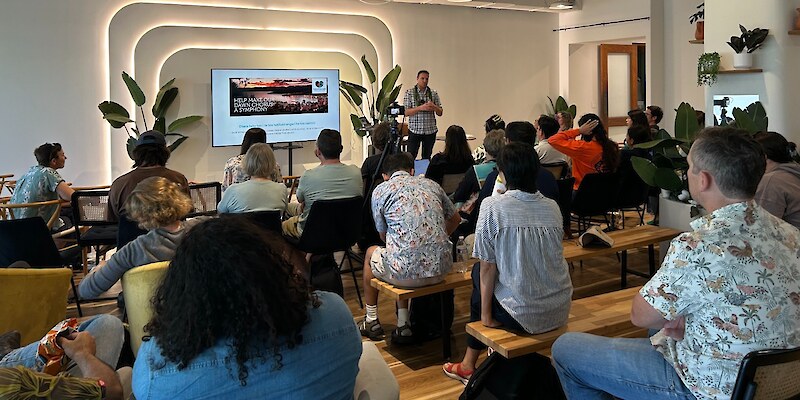 What surprised people most was that we’ve built a citywide team that makes this work possible at all. The technical side, they already understood. That’s what people overseas couldn’t get their heads around.
Giving the power back to people is a fundamental necessity, not a nice to have.
This whole movement runs on New Zealand passion, grit and determination. Being able to show that to the rest of the world, and hear what they’re building too, that’s something else.
Posted: 28 August 2026