Predator Free Wellington
  • Our project
    • Our project
    • News
    • FAQs
    • Knowledge hub
    • Meet our team
    • Our impact
    • Our progress
    • Our supporters
    • Contact us
    • Impact dashboard
  • Sign up – Phase 2
    • Phase 2
    • Phase 2 volunteering
  • Miramar
  • Trapping
    • Find a trapping group
    • Community heroes
    • Knowledge hub
  • Support us
  1. Home
  2. Trapping
  3. Gum Gully ki Tūranga Rere

Gum Gully ki Tūranga Rere

About us

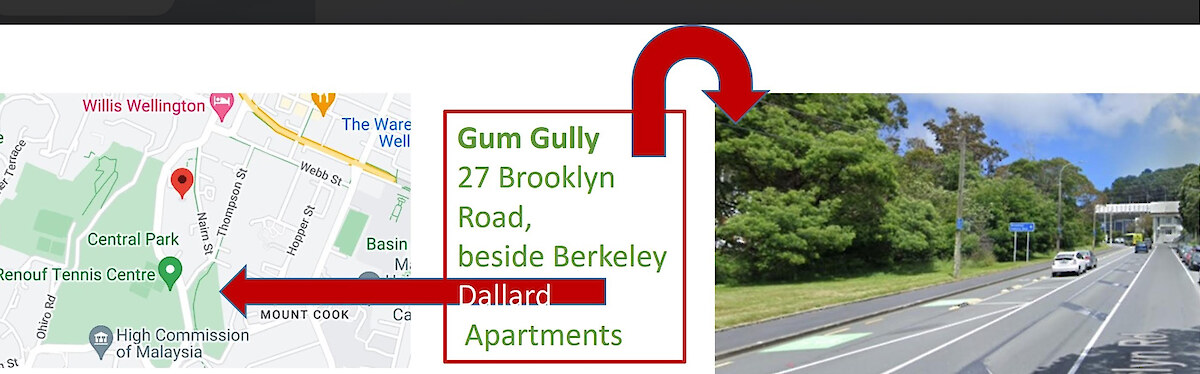
Gum Gully ki Tūranga Rere is part of the Town Belt that lies between the Central Park Substation to the south, and Berkeley Dallard Apartments to the north. The gully is tucked quietly below Brooklyn Road. Tūranga Rere is the Te Reo name for the Brooklyn Foothills which this area belongs to.

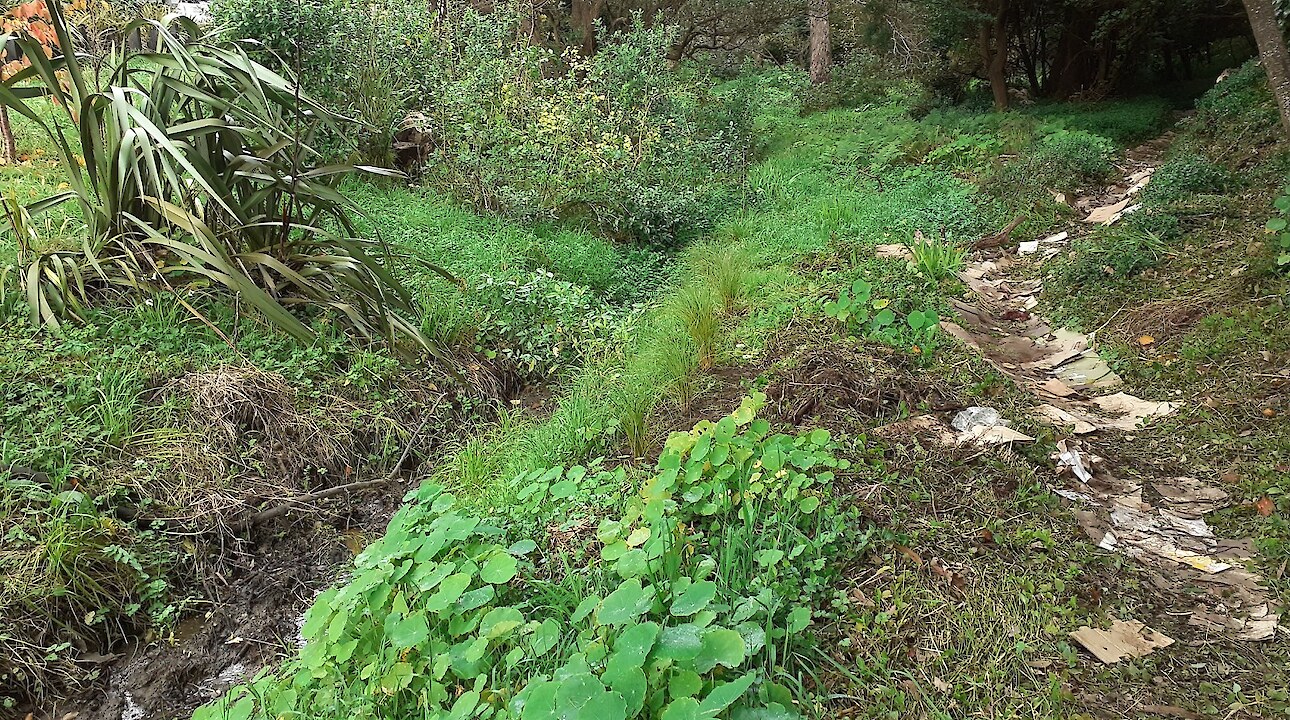
50 years ago Gum Gully ki Tūranga Rere featured walking tracks winding between its tall eucalyptus trees. Our aim is to recreate the walking tracks, presenting walking commuters with a green oasis of wellbeing as they spend 10 minutes meandering through Gum Gully ki Tūranga Rere. We are planting native trees and shrubs, including along the waterways. Some large fallen trees have conveniently become The Picnic Area, and we have a dozen traps installed throughout the site. And in the interim we have placed biodegradable, cardboard tracks throughout the site.

The group started in May 2021 with the help of restoration experts from other local restoration groups. Special thanks to Wellington City Council restoration experts, Berhampore Nursery and Ranger Rachel. Working Bees are on the 3rd Saturday of the month, from 10:30am – 12 noon when we stop for a cuppa and a sweet snack. New faces are always welcome!
Our area

Photos

Contact

Carol

E [Enable JavaScript to view protected content]

  • Facebook
  • Facebook
  • Instagram
  • LinkedIn
  • Contact us
  • Receive our newsletter

© 2026 Predator Free Wellington • Privacy statement • Website by RS

  • Home
  • Our project
    • Our project
    • News
    • FAQs
    • Knowledge hub
    • Meet our team
    • Our impact
    • Our progress
    • Our supporters
    • Contact us
    • Impact dashboard
      • Native birds are closing the gap on introduced birds on Miramar Peninsula
      • Measuring economic impact
      • Social outcomes emerging from Predator Free Wellington
      • Why Predator Free Wellington is built on community partnership
  • Sign up – Phase 2
    • Phase 2
    • Phase 2 volunteering
  • Miramar
  • Trapping
    • Find a trapping group
    • Community heroes
    • Knowledge hub
      • Our urban predator free blueprint (2024)
      • Most Significant Change (2025)
      • Return on investment (2025)
      • The value of volunteers (2024)
      • Habitat preferences of Ship rats (2023)
      • Social-ecological research (2022)
      • People, nature and wellbeing (2020)
      • Predator Free Miramar: How to kill rats and engage a community (2019)
      • Biosecurity: Rat or mouse?
      • Biosecurity: Rat or wētā droppings?
      • Biosecurity: Chew marks and chew cards
      • Biosecurity: Tracking tunnels and prints
      • How to get trapping (guide)
      • How to build a trapping tunnel
      • How to rat proof your compost
      • How to make a wētā hotel
      • How to build a corflute trapping tunnel
      • H2Zero trial – case study
      • Improving our biosecurity – case study
      • Using dog detectors early – case study
      • How to maintain your Victor rat trap
      • How to run a tunnel building workshop
      • Conceiving an unfenced urban ecosanctuary at Mātai Moana (2024) – external link
      • Estimating the impact of Predator Free Wellington on tree wētā (2025) – external link
      • Assessing the effects of predator control and habitat on lizards in an urban landscape (2025) – external link
      • Webinar - Analysis of Predator Free Wellington data from Miramar (2024)
  • Support us
  • Facebook
  • Instagram
  • LinkedIn
  • Newsletter signup
  • Search...